
There is a point in every product launch when the packaging is ready, the product is almost ready to ship, and someone asks a surprisingly basic question: “Where is the barcode?”
It is easy to overcomplicate the answer. A retail barcode is essentially a machine readable product identifier. It helps in identifying a product by retailers, marketplaces, etc. The EAN 13 13-digit code is used for retail products worldwide.
First, decide what you actually need
This is where many new businesses should slow down.
You do not necessarily need one barcode for your entire brand. A different product variation generally needs its own unique code. A different size, flavour, colour or pack can therefore require a separate barcode.
For example, if you sell a face cream in three sizes, assuming one number can cover all three could create problems later when you start listing products across different sales channels.
An Barcode for Products is therefore less about making packaging look professional and more about giving each individual product or SKU its own identity.
EAN 13 or UPC?
Wherever you want to sell, it decides the response.
Though UPC A uses 12 digits and is known to be more popular in North America, EAN 13 is a 13-digit barcode known to be more popular worldwide. Retailers and marketplaces can have their own requirements, so checking those requirements before purchasing is sensible.
If your target market is outside North America, EAN 13 may be the more relevant format. But do not choose purely because somebody tells you one format is “better”. Your sales channel should influence the decision.
The part sellers often overlook
Buying a barcode is not the same thing as getting a GS1 registration.
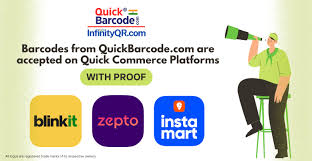
QuickBarcode states that its private barcode solutions are different from GS1 registration and do not provide GS1 company prefixes or GS1 India assigned 890 prefix barcodes. It also recommends checking the requirements of your retailer, marketplace or distributor before purchasing.
That distinction matters. If a particular marketplace or retailer specifically requires GS1 registered numbers, you should know that before spending money on another type of barcode.
What does buying actually look like?
Current packages’ costs (varying from ₹4,499 to ₹14,499 including GST) start from 5, 10, 25, 50, and 100 retail barcodes. Larger packages are also available. The listed packages are presented as a one time purchase without annual renewal.
The process itself is fairly straightforward. You select the required package, provide your product information, receive the barcode files and documentation, and then use the codes on your packaging or relevant sales channels.
Before you print anything
An EAN 13 Barcode should not simply be pasted onto packaging and forgotten.
Check that the assigned number corresponds to the correct product. To detect errors in packaging, the provider offers a barcode scanning mobile app for double-checking the barcode before printing.
Besides, remember that the shop, marketplace, or organization where you want to sell decides whether they accept barcodes or not.
The honest takeaway is simple. Do not buy the largest package just because it seems to be a good deal. Count your products and check what you want to sell and where. Check whether they allow barcoding or not. Then decide which package you should buy. Barcode is a small part of a product launch, but if not done correctly, it can create a significant problem later.