
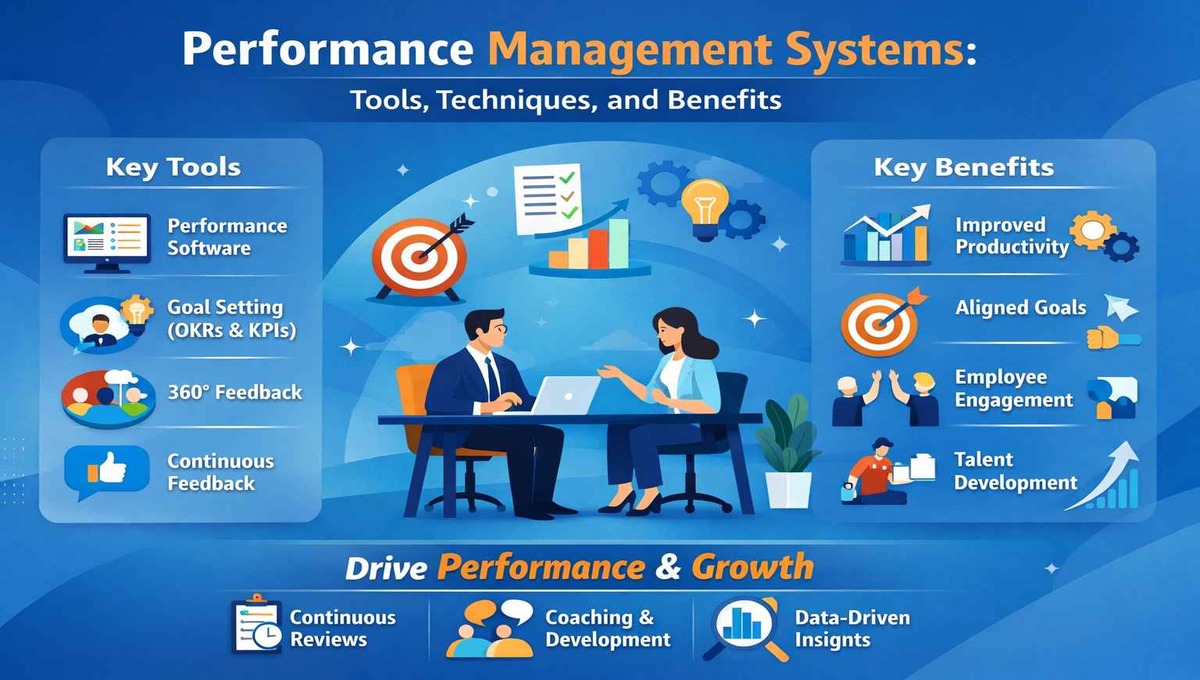

In an era of rapid digital transformation and evolving workplace expectations, organizations must adopt structured approaches to manage and enhance employee performance. A Performance Management System (PMS) plays a critical role in aligning individual efforts with organizational goals, improving productivity, and fostering continuous development. Rather than focusing solely on annual reviews, modern performance management systems emphasize ongoing feedback, data-driven insights, and employee growth. This blog explores the essential tools, techniques, and benefits of performance management systems and why they are vital for long-term business success.
Understanding Performance Management Systems
A Performance Management System is a formal framework used by organizations to define, monitor, and evaluate employee performance. It involves setting clear objectives, measuring progress, providing regular feedback, and supporting professional development. Unlike traditional appraisal methods, a PMS promotes continuous improvement by encouraging open communication between employees and managers.
An effective performance management system ensures that employees understand what is expected of them and how their work contributes to the organization’s strategic objectives. This clarity helps build accountability, transparency, and trust across all levels of the organization.
Tools Used in Performance Management Systems
Modern performance management systems rely on a variety of digital and strategic tools to streamline processes and improve accuracy.
Performance Management Software
Performance management software integrates goal tracking, performance reviews, feedback, and analytics into a single platform. These tools enable real-time monitoring of employee progress, reduce administrative effort, and provide actionable insights for decision-makers.
Goal-Setting Frameworks
Frameworks such as Objectives and Key Results (OKRs) and Key Performance Indicators (KPIs) are widely used to define measurable goals. These tools help employees stay focused on priorities while allowing managers to assess performance objectively.
360-Degree Feedback Tools
360-degree feedback tools gather performance input from multiple sources, including peers, supervisors, subordinates, and sometimes clients. This holistic approach offers a more balanced and accurate evaluation of employee performance.
Continuous Feedback and Recognition Tools
Digital feedback tools allow managers and peers to provide instant recognition and constructive feedback. Continuous feedback promotes timely performance improvements and strengthens employee engagement.
Effective Techniques for Performance Management
While tools provide structure, the success of a performance management system depends largely on the techniques used to implement it.
Continuous Performance Reviews
Instead of annual appraisals, organizations are shifting toward regular performance discussions. Monthly or quarterly check-ins help employees stay aligned with expectations and address challenges proactively.
Coaching and Mentoring
Managers play a key role in guiding employee development. Coaching and mentoring techniques focus on skill enhancement, career progression, and performance improvement, creating a supportive work environment.
Data-Driven Performance Analysis
Using performance data and analytics enables objective evaluation and informed decision-making. Data-driven insights help identify high performers, skill gaps, and training needs.
Individual Development Plans
Personalized development plans encourage employees to build new skills and prepare for future roles. These plans align employee growth with organizational goals, benefiting both parties.
Benefits of Performance Management Systems
Implementing a robust performance management system offers significant advantages for organizations and employees alike.
Improved Productivity and Efficiency
Clear expectations and measurable goals help employees prioritize tasks and perform more effectively. Continuous feedback ensures that performance issues are addressed promptly.
Alignment of Individual and Organizational Goals
Performance management systems connect individual contributions to broader business objectives, ensuring that every employee plays a role in achieving organizational success.
Increased Employee Engagement and Motivation
Regular feedback, recognition, and development opportunities enhance employee morale and job satisfaction. Engaged employees are more committed and productive.
Fair and Transparent Evaluations
Standardized performance criteria minimize bias and promote fairness in assessments, leading to greater trust in the evaluation process.
Enhanced Talent Retention and Development
Employees who receive consistent feedback and growth opportunities are more likely to stay with the organization. A strong PMS supports succession planning and leadership development.
Conclusion
A well-structured Performance Management System is essential for organizations aiming to build a high-performance culture. By leveraging the right tools, applying effective performance management techniques, and focusing on continuous improvement, businesses can enhance productivity, employee engagement, and long-term success. As workplaces continue to evolve, performance management systems will remain a critical driver of organizational growth and competitive advantage.