

Learning English is a goal many people set when they want to advance in education, career, or communication. One of the most common suggestions learners hear is: “Watch movies in English and you’ll become fluent.” At first, it sounds logical—movies expose you to real conversations, natural accents, and everyday vocabulary. Learners often wonder whether this method alone can help them in speaking English fluently or if other practices are also necessary.
But the crucial question remains: is watching movies by itself enough to help you achieve fluency in English?
The simple answer is no!
Movies can certainly sharpen your listening and vocabulary, but fluency requires more than passive exposure.
Let’s explore why films are a helpful resource, where they fall short, and how you can integrate them into a broader strategy for speaking English fluently.
The Benefits of Watching Movies for English Learning
Movies can be a powerful tool to enhance language skills if used correctly. Some of the key benefits include:
- Exposure to Real Conversations
Unlike textbooks, movies showcase natural speech, slang, and cultural nuances. This helps learners understand how native speakers use English in day-to-day situations. - Improved Listening Skills
By listening to various accents, tones, and pronunciations, learners gradually become better at comprehending different styles of spoken English. - Contextual Learning
Visual clues, body language, and situational context make it easier to grasp the meanings of words and phrases without constantly depending on a dictionary. - Cultural Understanding
Movies reflect the traditions, behaviors, and values of English-speaking communities. This cultural exposure boosts not only language comprehension but also confidence in conversations.
Why Movies Alone Are Not Enough
While movies are beneficial, relying solely on them has some limitations:
- Passive Learning
Watching a movie is mainly a passive activity. Without speaking or practicing, learners may still struggle to express themselves fluently, despite understanding the language. - Incomplete Grammar and Writing Practice
Movies do not teach grammar systematically. Also, since you are only listening and not writing, your reading and writing skills remain underdeveloped. - Vocabulary Limitations
Repetitive exposure to similar genres may limit you to a narrow set of words and phrases instead of a broad, functional vocabulary. - Risk of Misunderstandings
Slang, idioms, and fast speech can easily confuse beginners, leading to incorrect usage if not cross-checked with proper learning resources.
How to Make the Most of Movies for Learning English
If you want to use movies as a tool for improving fluency, here are some practical strategies:
- Use Subtitles Effectively
Start with subtitles in English. This helps you connect spoken words with correct spelling and structure. Later, challenge yourself by turning off subtitles. - Repeat and Shadow
Pick your favorite dialogues or scenes and try to repeat them aloud. This “shadowing” technique improves pronunciation and speaking rhythm.
Note New Phrases
Keep a notebook for new words or expressions and try to use them in your conversations or writing exercises. - Mix It With Practice
After watching a film, discuss it with a friend, join an English-speaking group, or write a short review. Active practice is the crucial step missing in just watching.
Additional Methods to Improve Fluency
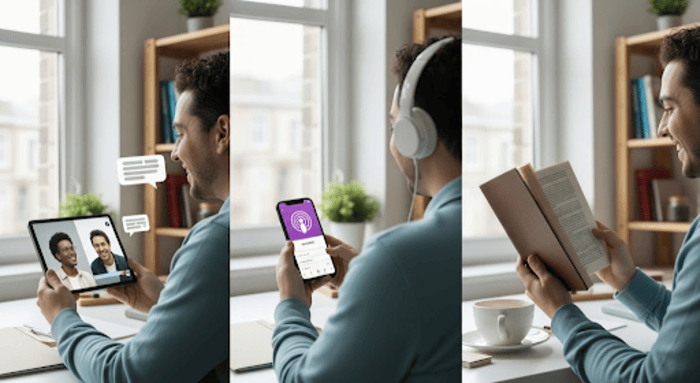
To truly learn how to speak English fluently, movies should be combined with other activities such as:
- Daily Speaking Practice – Engage in conversations with peers, tutors, or through language exchange apps.
- Reading Widely – Books, articles, and blogs help expand vocabulary and improve sentence formation.
- Grammar and Vocabulary Exercises – Structured learning through apps, lessons, or online quizzes ensures accuracy.
- Writing Journals or Essays – Regular writing helps sharpen both thought process and sentence flow.
Final Thoughts
Watching movies is undoubtedly an enjoyable and effective way to enhance listening, vocabulary, and cultural awareness, but it is not enough on its own to achieve complete English fluency.
To master the language, you must balance passive learning (like watching films) with active practice (speaking, writing, and engaging in honest conversations). By combining these methods, you’ll not only understand English better but also gain the confidence and skills needed to communicate effortlessly.