
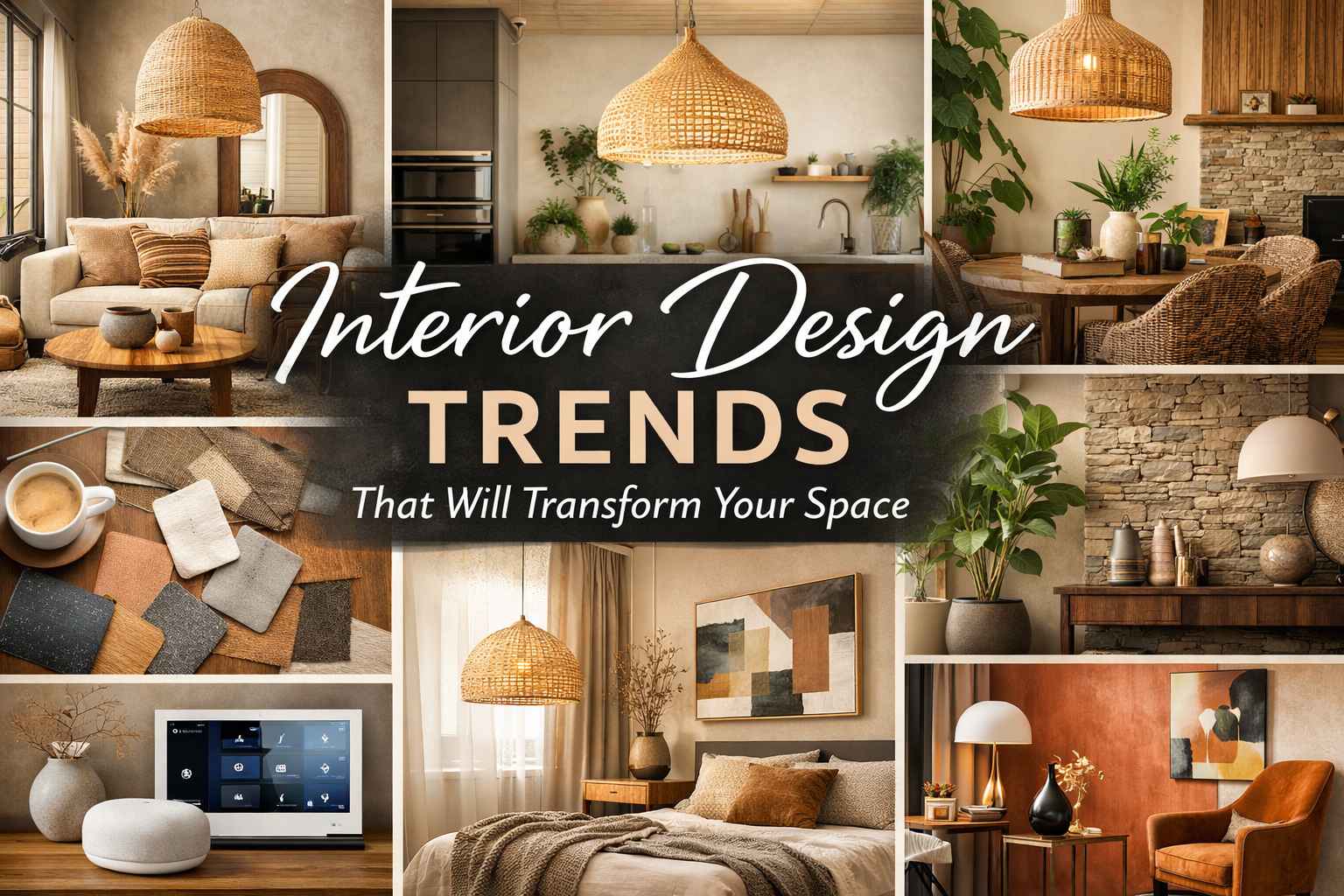

Interior design is more than just decorating a room—it’s about creating a space that reflects your personality, supports your lifestyle, and makes you feel truly at home. As lifestyles evolve, so do design preferences. Today’s interior design trends focus on comfort, sustainability, and meaningful aesthetics rather than purely visual appeal. Whether you’re planning a complete home makeover or just refreshing a single room, these interior design trends can truly transform your space.
1. Warm, Earthy Color Palettes
Cool grays are stepping aside to make room for warmer, earth-inspired tones. Shades like terracotta, beige, olive green, clay, and soft browns are becoming increasingly popular. These colors bring a sense of calm, grounding, and connection to nature. They work beautifully in living rooms and bedrooms, creating cozy yet elegant environments. Pairing warm neutrals with natural textures enhances the overall depth of a space.
2. Sustainable and Eco-Friendly Design
Sustainability is no longer optional—it’s a major focus in modern interior design. Homeowners are choosing eco-friendly materials such as bamboo flooring, reclaimed wood furniture, recycled metal accents, and organic fabrics. Energy-efficient lighting and low-VOC paints are also gaining traction. Sustainable interior design not only reduces environmental impact but also promotes healthier living spaces.
3. Multifunctional Spaces
With remote work and flexible lifestyles becoming the norm, multifunctional interiors are essential. Rooms are now designed to serve more than one purpose—think home offices that double as guest rooms or dining spaces that transform into workstations. Smart furniture like foldable desks, storage ottomans, and modular sofas helps maximize space without sacrificing style.
4. Statement Lighting as a Design Feature
Lighting is no longer just functional—it’s a statement. Oversized pendant lights, sculptural chandeliers, and artistic wall sconces are being used as focal points in interior design. Layered lighting, which combines ambient, task, and accent lighting, adds depth and drama to rooms. The right lighting can completely change the mood and perception of a space.
5. Biophilic Design and Natural Elements
Biophilic interior design focuses on bringing nature indoors. Large indoor plants, natural light, stone surfaces, wooden finishes, and water-inspired elements are becoming central design features. This trend improves well-being, reduces stress, and creates a refreshing atmosphere. Even small touches like plant corners or botanical artwork can make a noticeable difference.
6. Textured Walls and Materials
Flat, plain walls are being replaced with textured finishes. Limewash paint, textured wallpaper, wood paneling, and decorative plaster add character and dimension to interiors. Mixing textures—such as soft fabrics with rough stone or smooth metals—creates visual interest and makes spaces feel layered and intentional.
7. Personalized and Curated Interiors
Cookie-cutter designs are out. Modern interior design celebrates individuality. Homeowners are mixing vintage pieces with modern furniture, displaying personal collections, and incorporating handmade or artisanal décor. This trend emphasizes storytelling—your home should reflect who you are, not just what’s trending.
8. Minimalism with Warmth
Minimalism is evolving into a softer, more inviting style. Instead of stark white spaces, designers are focusing on warm minimalism—clean lines combined with cozy textures, subtle colors, and comfortable furniture. The result is a clutter-free space that still feels welcoming and lived-in.
9. Smart Home Integration
Technology is seamlessly blending into interior design. Smart lighting, automated curtains, voice-controlled systems, and hidden charging stations are becoming standard features. The key trend here is subtlety—technology that enhances comfort without disrupting the aesthetic of the space.
10. Bold Accents and Artistic Touches
While neutral bases remain popular, bold accents are making a comeback. Think colorful artwork, patterned rugs, statement chairs, or dramatic accent walls. These elements add personality and energy, allowing homeowners to experiment without overwhelming the entire space.
Frequently Asked Questions (FAQ)
Q1: How do I incorporate interior design trends without fully renovating my home?
You can start small by updating paint colors, adding statement lighting, incorporating plants, or changing textiles like cushions and rugs. These minor updates can make a big impact.
Q2: Are interior design trends expensive to follow?
Not necessarily. Many trends, such as sustainable design or warm minimalism, focus on quality over quantity. Thrifted furniture, DIY projects, and strategic upgrades can keep costs low.
Q3: How do I choose the right interior design trend for my home?
Focus on your lifestyle, space size, and personal taste. Trends should enhance how you live, not restrict it. It’s okay to mix trends and adapt them to suit your needs.
Q4: How often should interior design be updated?
There’s no fixed timeline. Small refreshes every few years—like changing décor or paint—can keep your home feeling current without major renovations.
Q5: Can I mix multiple interior design styles?
Yes! Mixing styles is encouraged as long as there’s a common element, such as color or texture, to create harmony throughout the space.