
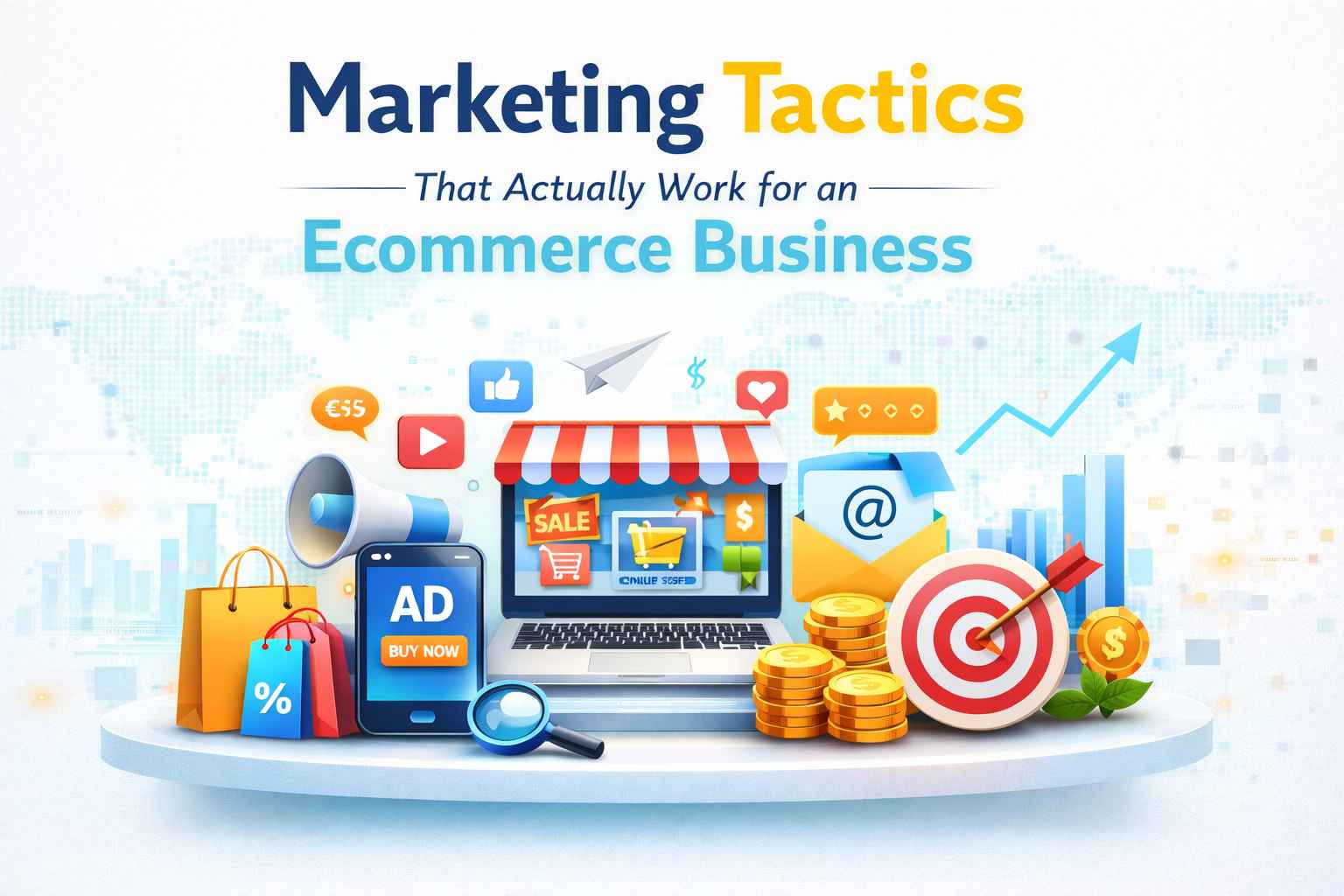

Running an ecommerce business today is both exciting and brutally competitive. With low barriers to entry, new online stores launch every day, all fighting for the same attention, clicks, and conversions. Flashy trends come and go, but sustainable growth comes from marketing tactics that are proven, practical, and customer-focused. Below are the strategies that consistently work for ecommerce businesses—no hype, just results.
1. Build a Brand Before You Push a Sale
One of the biggest mistakes ecommerce businesses make is trying to sell before earning trust. Consumers don’t just buy products; they buy brands they relate to. Your visuals, messaging, tone, and values should be consistent across your website, social media, emails, and ads.
A clear brand story—why you exist, who you serve, and what makes you different—creates emotional connection. When customers trust your brand, price becomes less of a barrier, and loyalty follows naturally.
2. Optimize for Search Intent, Not Just Keywords
SEO remains one of the highest ROI marketing channels for any ecommerce business, but only when done correctly. Instead of stuffing product pages with keywords, focus on search intent. Ask: what problem is the customer trying to solve?
Create high-quality product descriptions, comparison guides, FAQs, and blog content that answer real questions. Long-tail keywords like “best running shoes for flat feet” convert far better than generic terms like “running shoes.” SEO is a long game, but it compounds over time and reduces reliance on paid ads.
3. Use Paid Ads Strategically, Not Emotionally
Paid advertising works—but only when data drives decisions. Many ecommerce businesses burn money on ads because they scale too fast or chase vanity metrics like impressions and clicks.
Start small. Test creatives, audiences, and copy. Track metrics that matter: cost per acquisition (CPA), return on ad spend (ROAS), and lifetime value (LTV). Platforms like Meta and Google reward consistency and relevance, so optimize continuously instead of constantly restarting campaigns.
Retargeting ads, especially for abandoned carts and product viewers, are often the most profitable campaigns you can run.
4. Leverage Email Marketing for Predictable Revenue
Email marketing is still one of the most powerful tools for an ecommerce business, mainly because you own the audience. Unlike social platforms, no algorithm can take it away from you.
Focus on building your list with value-driven incentives like discounts, free guides, or early access. Then segment your audience based on behavior—new subscribers, repeat customers, inactive users—and tailor your messaging.
Automations such as welcome sequences, abandoned cart emails, post-purchase follow-ups, and re-engagement campaigns can generate revenue on autopilot.
5. Turn Social Media into a Relationship Channel
Social media shouldn’t feel like nonstop advertising. The ecommerce brands that win use social platforms to educate, entertain, and interact. Short-form video, behind-the-scenes content, user-generated posts, and storytelling consistently outperform polished sales posts.
Engage with comments and messages like a real human. Customers who feel seen are more likely to buy—and recommend you to others. Influencer collaborations, especially with micro-influencers, can also drive highly targeted traffic without massive budgets.
6. Use Social Proof to Reduce Buying Anxiety
Online shoppers can’t touch or test products, which creates hesitation. Social proof helps eliminate that friction. Reviews, testimonials, user photos, and case studies reassure potential buyers that others trust your brand.
Feature reviews prominently on product pages and ads. Encourage customers to leave feedback with follow-up emails or incentives. Authentic, imperfect reviews often convert better than overly polished testimonials because they feel real.
7. Improve Conversion Rate Before Driving More Traffic
More traffic doesn’t always mean more sales. Sometimes the problem isn’t marketing—it’s conversion. Small improvements to your website can significantly increase revenue without increasing ad spend.
Focus on fast page load speeds, mobile optimization, clear calls-to-action, easy navigation, and a frictionless checkout process. Trust badges, clear return policies, and transparent shipping information also boost conversions.
8. Retain Customers Like It’s a Growth Strategy
Customer retention is often overlooked, yet it’s one of the most profitable marketing tactics for an ecommerce business. Acquiring a new customer is far more expensive than keeping an existing one.
Loyalty programs, exclusive offers, personalized recommendations, and exceptional customer support turn one-time buyers into repeat customers. The goal isn’t just a sale—it’s a long-term relationship.
Final Thoughts
There’s no single magic tactic that guarantees success, but ecommerce businesses that grow consistently focus on fundamentals: trust, relevance, data, and relationships. Marketing works best when it’s customer-centric, measurable, and adaptable.
Trends will change. Platforms will evolve. But if you focus on delivering real value and meeting customers where they are, your ecommerce business will stay competitive—and profitable—for the long run.