
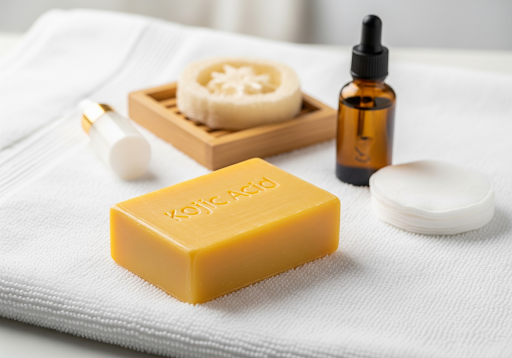

Many people exploring options for a more even complexion eventually come across kojic acid soap.This type of skin brightening soap is designed to address concerns such as sun spots, post‑acne marks, and general dullness. Understanding how kojic acid interacts with the skin helps users set realistic expectations, use these products correctly, and minimize the risk of irritation.
What Is Kojic Acid?
Kojic acid is a compound originally derived from certain types of fungi and as a by‑product of fermented foods such as sake and soy sauce. In skincare, it is known as a tyrosinase inhibitor. Tyrosinase is an enzyme involved in melanin production, the pigment that gives skin its colour. By partially blocking this enzyme, kojic acid skincare products can help reduce the appearance of hyperpigmentation over time.
Unlike harsh bleaching agents, kojic acid works gradually. It does not remove pigment already present in the skin instantly, but it can slow down the formation of new excess pigment when used consistently as part of a routine.
How Kojic Acid Soap Acts on Dark Spots
When used as a cleansing step, kojic acid soap exposes the outermost layers of the skin to kojic acid during contact time. As the soap is massaged onto the skin, it helps lift surface impurities while allowing the active ingredient to interact with the upper epidermal layers.
With regular use, this may soften the appearance of dark spots related to sun exposure, previous blemishes, or uneven tanning. The goal is a more uniform tone rather than a lighter overall complexion. Because contact time with soap is relatively short, most regimens rely on consistent, repeated use rather than prolonged exposure in a single wash.
Suitable Skin Types and Considerations
Not all skin types respond in the same way to kojic acid. Those with normal to combination or oily skin often tolerate kojic acid soap well when it is balanced with gentle cleansing agents and hydrating ingredients. Individuals with dry or sensitive skin may need to use it less frequently or only on targeted areas rather than the entire face or body.
Patch testing is crucial. Applying the soap to a small area of skin and monitoring for several days helps identify any unusual redness, burning, or itching. If irritation occurs, reducing frequency or discontinuing use is advisable.
How to Incorporate Kojic Acid Soap into a Routine
A typical routine using skin brightening soap starts with wetting the skin, lathering the soap between the hands, and gently massaging the foam over the desired areas. Many users allow the lather to sit for a short period—often 20–60 seconds—before rinsing thoroughly with lukewarm water. Over‑rubbing or leaving the product on for excessive periods increases the risk of dryness and irritation.
After cleansing, it is important to apply a hydrating moisturizer to support the skin barrier. In the morning, broad‑spectrum sunscreen is essential. Any regimen that targets hyperpigmentation, including those with kojic acid, can make skin more sensitive to sunlight if sun protection is neglected.
The Role of Sun Protection in Hyperpigmentation Care
Hyperpigmentation care is incomplete without sun protection. Even the most effective brightening products cannot maintain results if the skin is exposed to unprotected ultraviolet radiation. Daily use of sunscreen with an appropriate SPF, combined with shade‑seeking behaviours and protective clothing, helps limit the triggers that cause uneven pigment in the first place.
This combination—thoughtful use of kojic acid soap, moisturization, and regular sun protection—offers a more comprehensive approach than relying on a single product alone.
Combining Kojic Acid with Other Ingredients
Some routines pair kojic acid skincare with other ingredients that support clarity and texture, such as niacinamide, mild exfoliating acids, or hydrating agents like glycerin and hyaluronic acid. However, combining too many active ingredients can overwhelm the skin. Introducing one new product at a time and monitoring the response is a sensible strategy.
Those already using prescription treatments, such as retinoids or stronger peeling agents, should consult a dermatologist before adding additional active products. Professional guidance helps prevent over‑exfoliation or barrier damage.
Conclusion
Kojic acid soap offers a targeted way to address concerns such as uneven tone and surface hyperpigmentation when integrated thoughtfully into a wider skincare routine. By understanding how it works, respecting individual skin tolerances, and pairing it with moisturization and diligent sun protection, users can take a more informed and balanced approach to brightening care. Consistency, patience, and attention to skin health remain central to achieving and maintaining visible results.