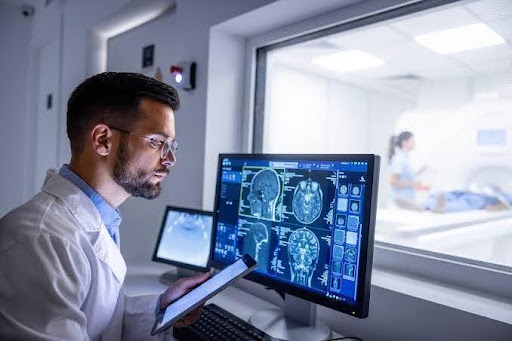


Tech is used in healthcare today in ways that are reshaping the industry at an unprecedented pace. Innovations like AI, telemedicine, and wearable devices are improving efficiency and patient outcomes, but they also come with challenges such as high costs, privacy concerns, and reliance on digital infrastructure. In this article, we explore 10 technological innovations transforming modern healthcare, highlighting both benefits and considerations.
1. Artificial Intelligence (AI) in Diagnostics
AI-driven diagnostic tools are helping doctors detect diseases earlier and more accurately. For instance, studies show AI can detect certain cancers in imaging scans with up to 94% accuracy. However, AI models may inherit biases from training data, and overreliance on automation could lead to diagnostic errors if not carefully monitored. According to Dr. Lisa Su, a radiologist at Mayo Clinic, “AI can augment our decision-making, but it should never replace clinical judgment.”
2. Telemedicine
Telemedicine usage surged by 38% in 2023 in the U.S., offering convenient access for remote patients. Yet, network connectivity issues and limited physical exams can pose challenges. Rural areas often face bandwidth limitations, and elderly patients may struggle with technology adoption.
3. Wearable Health Devices
Wearables allow continuous monitoring of heart rate, sleep patterns, and blood oxygen levels. Some devices now alert users to irregular heart rhythms, potentially preventing emergencies. On the downside, privacy concerns arise as sensitive health data is transmitted over networks. “Wearables provide unprecedented insights into patient health, but data security must be a priority,” notes Dr. Raj Patel, a cardiologist.
4. Robotics in Surgery
Robotic-assisted surgery improves precision and minimizes recovery times. However, high costs (surgical robots can exceed $2 million) and the need for specialized training limit adoption. Hospitals must weigh investment against potential patient benefits.
5. 3D Printing in Healthcare
3D printing enables patient-specific prosthetics and implants. Researchers are exploring bioprinting for organs, though clinical applications are still in early stages. Cost and regulatory hurdles remain key challenges.
6. Blockchain for Health Data Security
Blockchain enhances data security and interoperability but is complex to implement and requires significant infrastructure investment. A HIMSS report highlights that only 12% of hospitals have fully adopted blockchain solutions due to these barriers.
7. Virtual Reality (VR) and Augmented Reality (AR)
VR and AR improve medical training and surgery precision. Yet, adoption can be limited by equipment costs and required training. VR simulations, however, have reduced surgical errors by up to 30% in pilot studies.
8. Genomics and Personalized Medicine
Genomics allows treatment tailored to a patient’s genetic profile. While promising, it raises ethical questions regarding data privacy and insurance discrimination. Combining genomics with AI may soon enhance predictive healthcare models.
9. Internet of Medical Things (IoMT)
IoMT connects devices to monitor patients continuously, preventing complications and optimizing workflows. Still, network downtime or cyberattacks could disrupt care. Healthcare IT teams must implement robust security protocols.
10. AI-Powered Drug Discovery
AI accelerates drug development by analyzing molecular interactions. During the COVID-19 pandemic, AI helped identify potential therapeutic compounds faster than traditional methods. Nevertheless, regulatory approval processes remain lengthy, limiting immediate deployment.
Conclusion
Technology is transforming healthcare, offering unprecedented opportunities for patient care, operational efficiency, and medical research. Yet, challenges like privacy, cost, and regulatory hurdles remain. Moving forward, we can expect greater integration of AI, genomics, and IoMT, along with stronger policies addressing data security and ethical considerations. Healthcare providers and patients alike must embrace these innovations thoughtfully, balancing potential benefits with practical limitations.